The Happiest City in America | Featuring Nahid Fattahi
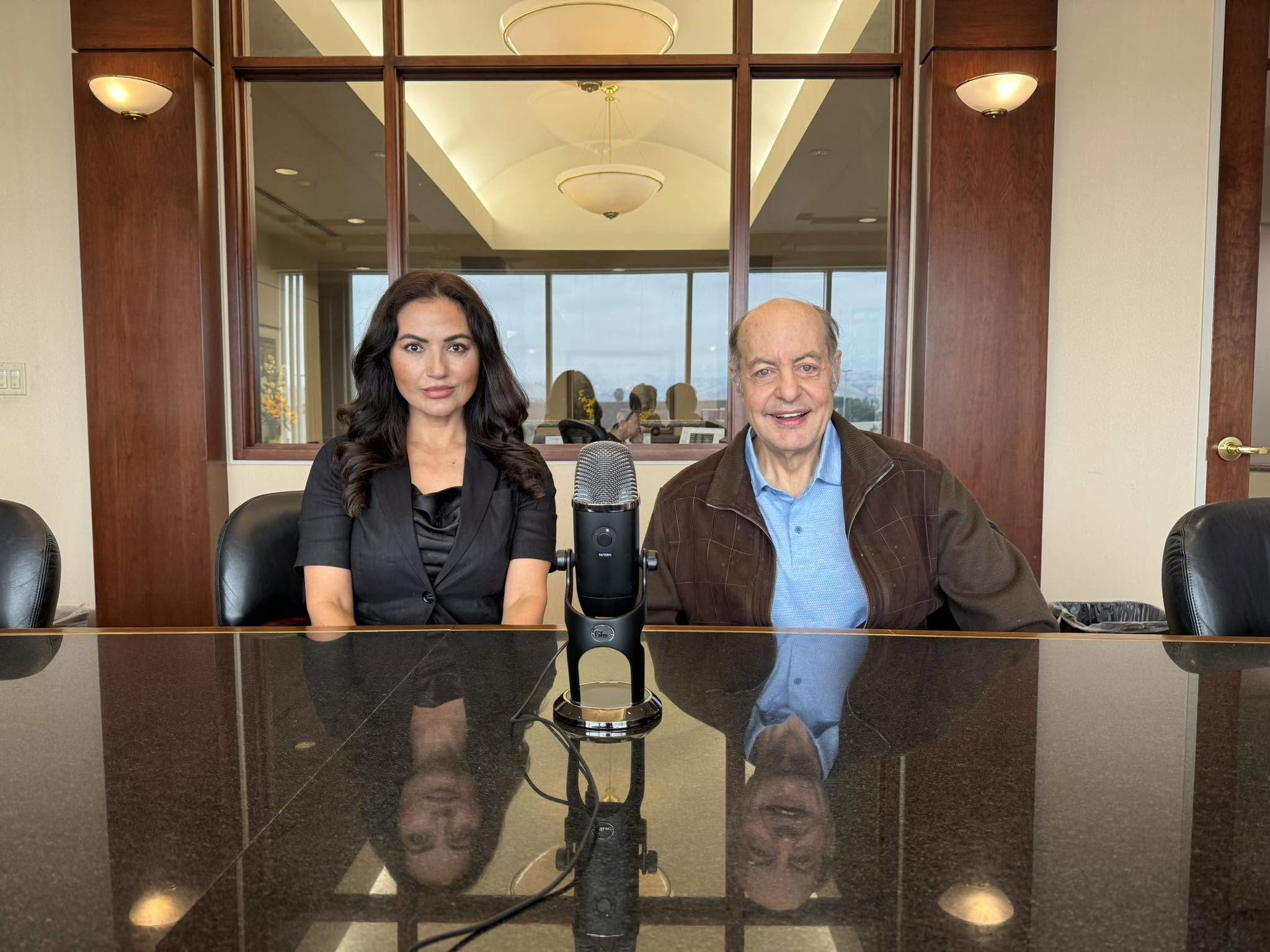
In this episode, psychotherapist, psychology professor, entrepreneur, speaker, and author Nahid Fattahi joins Fremont Focus Now to discuss Fremont's "happiest city" ranking, the loneliness and mental health challenges that can sit beneath outward success, immigrant family pressures, and the lived experiences that broad surveys can miss.
Produced by Jonathan Man
Listen on



Transcript
Fremont is part of Silicon Valley, the second largest city in Alameda County, and the fourth largest in the Bay Area, covering 92 square miles with more than 230,000 residents. Fremont Focus Now, hosted by lifelong Fremont resident and former City Councilmember David Bonaccorsi, will delve behind the headlines to showcase our civic, artistic, educational, nonprofit, faith-based, and business community leaders in Fremont and the surrounding cities of Newark and Union City to explore matters of local interest.
Welcome, Nahid Fattahi. How are you?
I'm doing very well. How are you?
Great. Thank you for coming to our Fremont Focus Now podcast. I'm going to introduce you in the third person to our audience. Nahid is a psychotherapist, adjunct professor of psychology, entrepreneur, speaker, and author whose work sits at the intersection of mental health, human behavior, and social impact. And you are also a Fremont resident.
I am, yeah, proudly.
And in that vein, you've had various articles that you've had published in Psychology Today and Ms. Magazine, correct?
Yes.
And how have you had the opportunity of, as a psychotherapist here locally, of getting published so often?
It started by just looking around and seeing I had a lot to say, and I thought writing articles about them makes sense. I had a Medium— I still have a Medium platform. I started writing there and some editors also noticed my work, so I was invited to— I submitted my work and was accepted in one place. And then it becomes not easier because every pitch is— I get a lot of rejections as well, but And also I am a— I applied for a fellowship at the OpEd Project, which helps with people who are interested in writing. So with that fellowship also helped me a lot.
And well, you have a tremendous number of links that we're going to be probably putting as show notes for this podcast so people will be able to have the opportunity of reading your many published works. But today we're going to focus primarily on Fremont. As you know, Fremont for the last several years has scored as the happiest city in the United States on a WalletHub survey, and you took that head-on. And this is a wonderful title called The Happiest City because it's instructive. The Happiest City in America Is Not What It Seems: The Hidden Loneliness Behind America's Happiest Zip Codes. And as I said to you before we began the show today, you are a wonderful writer. And, you know, I almost feel compelled just to simply spend the 20 to 25 minutes having you read the article because it reads well. But I want you to talk about what motivated you to write the article and what were your insights.
Sure. Well, I'm a Fremont resident and Fremont is a beautiful city and this article is not to argue that. We also have a lot of different communities and belonging to a community is extremely important in the essentially in ranking happiness because as humans we are social beings and we want to be a part of communities. I think to say that Fremont is not the happiest city perhaps is— I don't want to minimize this ranking that we have. It's a good ranking to have. I just want to really emphasize on that.
Well, let me just, as kind of a contextual framework, Fremont is one of the most diverse cities in the United States, and I think right now we are edging towards 55% of the people that were born outside the United States that are here, and we're living in an era in which immigration is being attacked. But I think that what your insight in this article, and I'm sure you'll speak to it, is that because we have people from East Asia, South Asia, from Afghanistan. There's a lot of aspirational energy, but because of some cultural constraints or constructs, people will say the right things because they want to be seen as being happy, but there's a lot of subterranean stress.
Exactly.
So why don't you talk about that?
Yeah, absolutely. So when we rank happiness, I think the This ranking is very objective and it's based on things like family unity, low divorce rates. It's based on annual income, which is the, the median is, I believe, $150K. It's based on the sort of, again, that nuclear, the idea of the nuclear family. It's based on self-reports of low rates of depression and anxiety and other mental health issues and, and some other factors. What that misses is the subjective experience of people. For example, happiness misses loneliness, it misses emotional distress, it misses disconnection amongst families, or those marriages that have lasted for 20+ years, but really The longevity of a marriage is not necessarily the quality. Those are two separate things.
And just as an intro into what I'm sure you're going to share is that you see individual patients. You're not just an academic researcher. You actually have a client base.
Yes, yes. I work, I work with people. I work with people from, you know, all over um, let's say California, um, because some of my sessions are on Zoom, but I do work with a lot of the people from the community as well. And so the stories that I hear, for example, is, um, you know, a man or a woman comes to me and they say they have been married for these many years, but they are not able— they're they're in a very unhappy situation but they're not able to get out of it because of their children. That's a very common narrative. It's, it's the kids. For financial reasons, people stay together because it makes more sense financially, even after the children leave the home. And again, well-being is really a lived experience. Happiness is a lived experience, and it's not just about, you know, economic measures, and it's not about the self-report. The other piece is self-reporting, right? So the stigma of— I mean, mental health has been stigmatized a little bit throughout the years because Everybody talks about mental health, but mental health is still a stigmatized topic for many people, especially people who come from collectivist cultures where you talk about your issues not with a therapist, not with a psychiatrist, but with your community or members of your community. Taking medication, for example, psychiatric medication is stigmatized for many people. So I will, you know, people say I will pray through my depression, I will pray through my, you know, other issues. And these are the type of points that ranking like these don't capture. And so if I'm from Fremont and I don't, I'm using I as a general term, I don't feel as happy and yet I live in the happiest city in America. Then, you know, the problem becomes about me, what is wrong with me, why am I not as happy living in this very happy city. And so that's also the story that that I hear a lot. People comparing themselves with, you know, these narratives that are sold to us.
I, as you know, have lived in Fremont virtually my entire life, and when I grew up—
You were born and raised here, right?
Basically raised from the age of 1 month on, and I've seen the increasing wonderful diversity of our community. It was primarily a white community when I was in high school. But what has happened, and I've observed this, is that, for example, in the Chinese culture, and it's shared among other minority groups, and it's not unique to that, but there's a shame associated with a child that may not be high-performing. And there's a wonderful organization that was formed by a doctor and his wife, Dr. Albert Wang, called FCSN, for Family and Children with Special Needs. And what he and his wife were able to do was to push back against the narrative within the Asian community of somehow shying away or being ashamed of special needs, and this wonderful elevation of the talents that his child and other children have. The other thing I've seen is that we have such, even within our community, We have such economic disparity between, you know, certain sections of Fremont versus the 94539 zip code and the 94555 zip code that feeds into American High. And I think people feel that too. So there's a real— even if you're in the happiest city, you mentioned that 80% of the people here have incomes over $75,000. We have a median income of $150,000, which is one of the highest in the country. There's not only that ranking, but within the city, if you will, I don't compare as well to others. I somehow don't— I'm not doing enough. I mean, you share your stories that you came across that you talk about in the article. Yeah, in that vein, go ahead.
Yeah, absolutely. I think the comparing the self to to the neighbor is a very another common story here. Even with families who do, you know, are doing pretty well for themselves, I hear stories like, my friend just bought a brand new Tesla and moved into a 5-bedroom in the Mission District, and I still live in, you know, my apartment and drive, I don't know, a Honda Civic, for example, right? And I'm trying so hard, but I'm not, I'm not doing as well. And when you speak with some of these, it's not that they're struggling financially, it's just that they're not doing as well, right? Silicon Valley as a whole, this is not just the Fremont story. In a very short period of time, we started to have a a whole lot of very wealthy people.
Yes, that was kind of what I was leading into, was this wonderful—
Because of the startup, kind of the startup narrative or the startup culture, not narrative, that we have here. And so again, comparing the self to others is a very common human behavior. We have done it, and in many ways it could help people to do better, to succeed, but when we compare, it's almost comparing the apples to oranges, and that creates a lot of miseries. And when I say miseries, people do feel extremely miserable just by, just because they continue to compare themselves and their story to to others.
Um, there was the one couple that you had in the story, and I think this speaks to one of the factors that will rank us high in the surveys is— and you mentioned it— the low divorce rate. But if you have cultures that are here that really disincentivize and shame people for getting divorced, you may not have actual divorces, but they're divorced within their own family emotionally.— and you've touched upon it.
Yeah, absolutely. There is a lack of disconnection. There is, you know, no kind of love per se in between the couple. There is no sex. There is infidelity and alternative lives other than what is inside the home. But On the outside, it looks like a picture-perfect family of, you know, a couple who have lived together for years, kids who are doing pretty well. And the other thing is the expectation of the parents from their children, right? Because again, the immigrant narrative is people come to America for that better life. Right? It's the land that promises happiness and the pursuit of happiness. And the children continue that story. Now, my parents, you know, I hear this from a lot of adult children of first generation that say that their parents have sacrificed everything to be here. Right? And they are now struggling to repay that. So it's called— it's— they're in debt essentially. In fact, I wrote an article about this and about the, you know, kind of that emotional or that success debt that they owe to their parents.
They owe their parents. They can never repay it and and they see the stress and the anxiety of their parents and they assimilate that. Yeah, I think there's also another aspect of it that because you've lived it as somebody that came from Afghanistan, you may not see it in the same way that I did. But my grandparents were from Italy and on my mother's side from Holland and England. The assimilation was immediate on my mother's side. The Italians and the Poles, Eastern Europeans, because they're quote-unquote white, have been able to assimilate. So part of the American success story is, well, I am now entitled, I'm white, I have my white privilege, even though they don't use that terminology. But you must be feeling, or you must be sensing within the minority communities, particularly with the anti-immigrant fervor coming from DC, some sense that, well, I've economically achieved, but I'm still not accepted by the larger society, and I feel that. Is that something that you come across?
Yeah, and I think that shows usually by just trying harder, right? And so we see that we have some of the most successful people here in the, you know, I was just talking about the startup culture here and the rise in extremely wealthy people. So it's a form of compensation. It's a form of compensation. I will try harder, I'll get wealthier, I will become that success story, right? And I'm not suggesting that it's all because of that, but that's also a part of the narrative that I think in many cases sometimes it happens very subconsciously and it's not a very conscious, you know, decision subconsciously. But when we, you know, collect all of that information and rank a city year after year as the happiest city, it's that, that story can be a little bit Irish. I mean, I don't think there is a happy city or the happiest city. I think a lot of places, they have their cons and they have their pros and they have their communities and Fremont is actually, I have lived in Fremont the longest because I'm from Afghanistan, as you know, and I, you know, I was born there, but then we were refugees, and then I have lived in other places. And so I moved here 23, almost 4 years ago, and this is the, and I've always lived in Fremont.
And your children attended public schools in Fremont?
Yeah, yeah, yeah, my children were born and raised here, attended public schools, and yeah, I mean, I love the city very, very much so.
There are those points where the narrative is this veneer of everybody's happy. Things, you pull back the covers, and a couple things. One is, you may not remember this, but there was a website called Ashley Madison. And it was where married people—
Oh yeah, married people going and looking for affairs.
Right. And it got hacked.
Yeah.
And it was a disproportionate number of people from Fremont that were busted hacking.
Okay.
So, I don't know what— we don't have a word in English, but if something's both funny and tragic at the same time, that's our reaction. It's like, oops, here it is. And on a sadder note, in the city, I don't know if there's any intention to suppress this, We don't have any local news coverage and it's very dicey, but we have suicides at Mission San Jose High every year. And again, it's that notion of having to, you know, your parents have sacrificed so much that they have huge expectations, and there's even jokes within the East Asian community, Chinese community, about what an A student is, a B student, a C student. It really is pretty devastating. So when I see parents who are from that tradition that are much more— they're less helicopter and much more supportive, that they're really fighting against the current within their own culture. So, what— again, I love the insight that there is no happiest city, and at the same time in your article you did talk about the the fact that we have some resources here. I would much rather be in the Bay Area being tied to universities than, for example, in the South. There's a huge divorce rate, and there's a contradiction because there's this, this perception that we're all fundamentalist Christians and we're all God-fearing, and yet you see higher divorce rates there. And so their lifestyle doesn't match in a different way from their professed faith tradition. What are some of the other contradictions that you see here between what people want others to perceive and how they're actually living that you haven't touched upon?
I think we touched on many of those aspects. The other piece is A lot of people who are especially— again, we said that more than 51% of Fremont is people who were born elsewhere, in another country. So these people leave their families and—
Oh, that's true.
They have their entire communities in their homes. For example, people from Afghanistan. I mean, the fall of Kabul happened in 2021, and people still have relatives and, and, and, and family members, close family members living in Afghanistan under the tyranny of the Taliban right now, where girls are banned from school past 6th grade, women are banned from universities, a lot of workplaces. Poverty is extremely on the rise, and so people, let's say, from Afghanistan who have to support their families back home, and not only they're supporting these family members and relatives, but they're also worried about their well-being, about their health. I was speaking with a woman who's, she lives here, but her grandchildren granddaughters are living in Afghanistan, and every time I speak with her, she is crying over her grandkids, and she says, you know, she feels so guilty for living here in this age, and her granddaughters are banned from school and their home, and they cannot do anything for their lives, right?
You have an article, I think, on our show notes that talks about the refugee experience. Is that right? Do you want to point that out? Out so for people that are listening that they can see it? You had it in the Progressive magazine.
Oh yeah, yeah, that's another piece, is the people who struggle with their status, immigration status, and are afraid of, you know, being deported to their home countries. I The story that gets missed on that is that these separations that are happening abruptly by ICE creates a lot of anxiety and trauma for the children. So the article that I wrote for the Progressive magazine touches on this, and it uses— I used to work, and I, again, I use one example of a client I used to work with, but I have seen and heard that story many, many times.
I think we have the seeds for another podcast. You're going to be our first returning guest for a future podcast. This will be one of them, but— and there's another story that I want you to briefly share that we can spend an entire episode on. One of the first encounters I had, and at one time that I actually had the honor of being at your home. Was when you hosted the young women from Afghanistan. This is well before the fall of Kabul in the mid-2016, 2017.
It was 2018. I think it was January 2018.
Ah, okay.
Yeah.
And it was the robotics team. Just talk briefly about that.
Yeah, the robotics team is a success story that stem actually from my hometown, Herat. And I They were visiting the US and I hosted them. You were there, Mayor, back then it was Lily Mei. She was there and a few other council members and my own family and we hosted them and wanted to welcome them. And although the founder of the robotic team is still working really hard and she has amazing initiatives going on. That whole team got obviously dismantled after the fall of Kabul in '21, and they all are outside of Afghanistan right now because it was dangerous for them to remain there. And those are also part of the stories that I think we need to hear more about.
A new form of diaspora.
Yeah.
Well, Nahid, I want to thank you for your time this morning, and we are going to do this again.
Yeah, thank you so much for having me. This was such a joy doing this session with you.
Thank you.