Yoko's Nutcracker | Featuring David Sloss
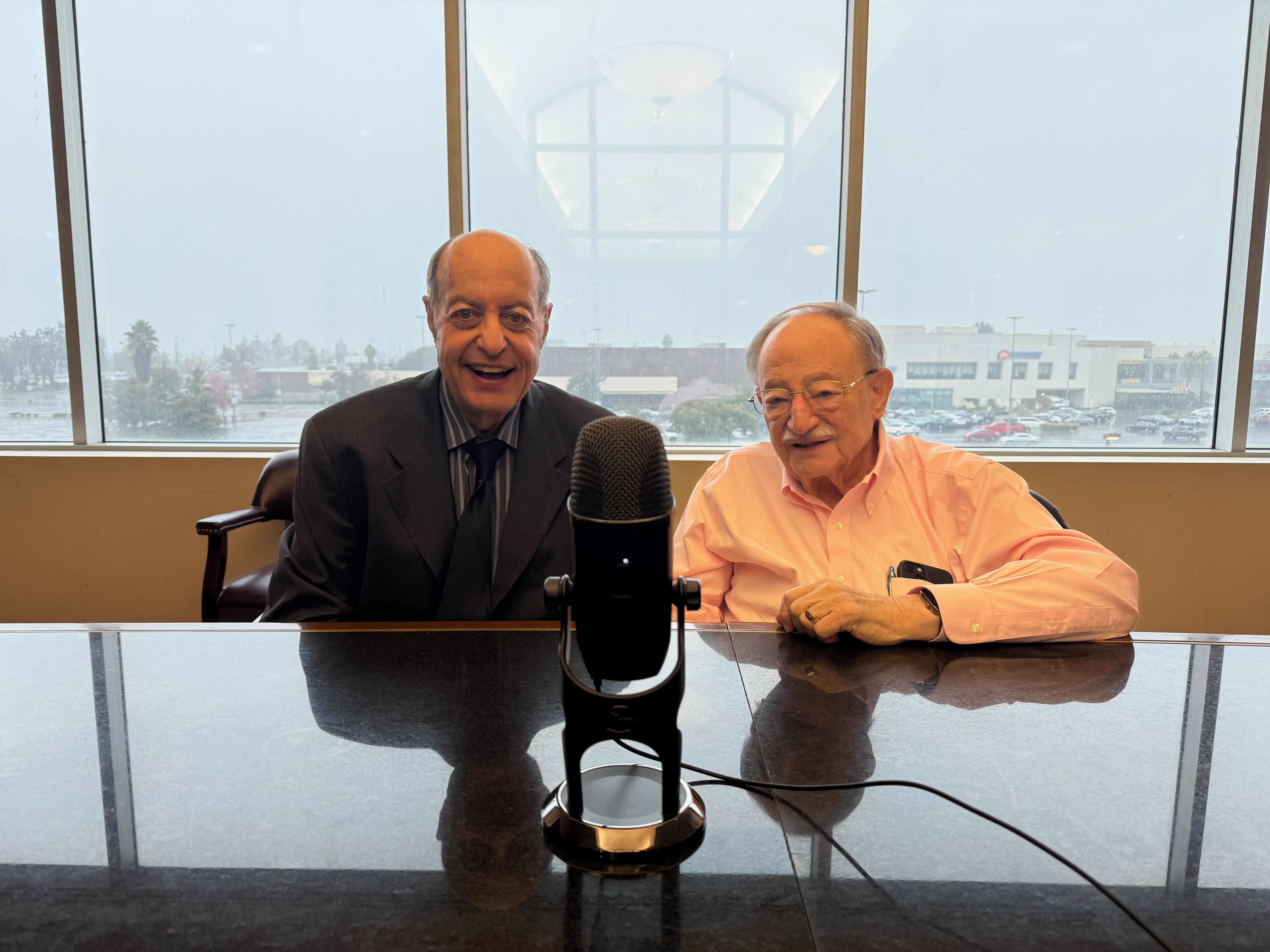
In this episode, we sit down with David Sloss, former conductor of the Fremont Symphony (1980-2012) and current artistic director of Fremont Opera. David shares his remarkable journey from Harvard to Stanford to producing Emmy-nominated shows at WGBH, and discusses the 20th anniversary of the Nutcracker production in collaboration with Yoko's Dance and Performing Arts Academy. We explore what it means to be a conductor, the evolution of the Fremont Symphony, and the unique challenges and rewards of conducting for ballet performances.
Produced by Jonathan Man
Listen on



Transcript
Fremont is part of Silicon Valley, the second largest city in Alameda county and the fourth largest in the Bay Area, covering 92 square miles with more than 230,000 residents. Fremont Focus Now, hosted by lifelong Fremont resident and former city council member David Bonaccorsi, will delve behind the headlines to showcase our civic, artistic, educational, nonprofit, faith based and business community leaders in Fremont and the surrounding cities of Newark and Union City to explore matters of local interest. Hello, David Sloss, welcome today to Fremont Focus Now. I'm looking forward to having a wonderful conversation about your many years of being a conductor in the city of Fremont.
Thank you very much. I'm looking forward to this.
And before we get into how you came to Fremont, we want to introduce you as a conductor. What does it mean to be a conductor?
Ah, that's... oh, well, that's a huge question.
Is it a.
We only have 25 minutes, so I don't know. To be a conductor, what does it mean to be a conductor? It means, of course, that you're standing up in front of a bunch of people and you are responsible for the shaping, the pacing, the details of the music. Conductors have a bad reputation among orchestra players. There's an old joke. What is it? What is the definition of an assistant conductor? And the answer is a mouse waiting to become a rat. But how can you... I apologize for having so much trouble answering what should be a very simple question.
Well, what we'll do is we'll as you, as we talk about your background, you can talk about being a conductor in various capacities and that may make it a little bit easier. So you didn't just waltz in one day and take the baton and lead the orchestra. You have an interesting background in undergraduate studies and graduate studies. Talk a little bit about that.
Okay. Well, I went to Harvard for college and while I was there I had already played the piano for many years and played the violin for a few years. I'd done a little bit of conducting. That doesn't really count in high school because it wasn't with an orchestra. It was just with piano and singers. We did Gilbert and Sullivan. But I got to college and realized that the only thing I really wanted to major in was music. And that was an interesting choice because the Harvard music department did absolutely nothing except musicology and history and theory. And the saying among the students was that in the music department they believed music should be seen and not heard. But the good part of that was that the students were absolutely free to do anything they wanted. And there was a huge amount of student activity and musical things that went on. I found myself, after a year or two, frequently playing the piano for rehearsals for Gilbert Sullivan for musicals, and playing the violin in all the orchestras, in the big symphony and in good orchestras for the shows. And how did I get to actually conduct? Well, one day it was the end of a rehearsal and I was walking home with a friend of mine and I was complaining about the guy who was conducting this show. I thought he was doing a terrible job. And so I was venting, why doesn't he do this? And why doesn't he say something about that? And why does he waste time doing this? Two weeks later, I got a phone call from somebody I didn't know at all. He said he was a stage director, he was directing, going to be directing a musical, and he was looking for a conductor. And I said, well, how did you find me? Well, he said he had talked to my friend and he had said, talk to David. He's got all kinds of ideas. That was literally what got me in front of an orchestra for the first time. And from there, you know, I went on conducting whatever I could as long as I was in college. And then there came looming the terrible prospect of graduating and being thrown out into the world and having to figure out what on earth I was going to do. I had no thought at that point that I was going to be a professional conductor. I was scared to even, you know, to think about that. And I had to find something to do. Well, it turned out that the educational TV station in Boston, WGBH, was looking for producer trainees, as they called it. And that sounded interesting. And so I went for it and got that job. And after six months of training, found myself producing and directing shows for the station.
Educational TV station WGBH in Boston, and has been, perhaps still is, one of the flagship stations in the Public Broadcasting System network, Isn't that correct?
That's absolutely correct.
So that shows that were produced there would be shown nationwide, isn't that right?
Many of them, yeah. There were local things, and there were things done for what was then called National Educational Television, NET. It was educational television then. It was not PBS yet, but it's the same thing. And there were all kinds of things that I got to do at WGBH. Many of them were music programs, many of them were various other things. Some of them were terribly tedious, and some of them were absolutely fascinating.
But your program was called 'A Room Full of Music.' Talk about that.
Well, that's okay. That was one particular show. It actually was two one-hour specials and it was folk music and it was a big deal. We had Pete Seeger on that show, and we had Joan Baez. Wow. And a bunch of other people. And the year that that show was produced and shown on NET, the people who ran the Emmy Awards decided it was finally time for them to recognize educational television and to have some Emmys for ETV. Things that had nothing to do with my show. The real reason for that was that it was the year that Julia Child had suddenly become nationally known. And the whole purpose of it really was to recognize Julia Child. But there's a story about that. Stop me if I'm droning on.
No, I want to hear about the Emmy.
Okay, well, so my show, 'A Room Full of Music,' was one of the shows nominated for an Emmy, and that got a bunch of us to the Emmy award dinner in New York at one of the hotels. And we were all seated at one table, all of us from WGBH. Julia Child was there, and it was really a foregone conclusion that she was the one who was going to win something. But there we were. And there's a story about Julia Child at that Emmy Award dinner, which I've always loved. The star of the show was to be Bill Cosby before he got into later difficulties. But he didn't make his appearance until he actually went on the air. They had other people doing all kinds of lesser stuff, including Julia's award, which happened before the broadcast. The broadcast was only going to be one hour. Well, okay. After Julia got her Emmy, someone comes to the table and says, would you come with us, please? We want to take a picture. And they take her to the next room and they're going to take a picture of Cosby handing her the Emmy and shaking hands. And she marches in and she says to Bill Cosby, well, I'm Julia Child and who are you? And Cosby says, I'm Sidney Poitier.
That's good.
And Julia says, oh, Mr. Poitier. Well, I've certainly heard that you're a fine actor.
That's great. Now we're going to be talking, because this is Fremont Focus Now, we're going to be talking in a few minutes about the 20th anniversary of the performance of the Nutcracker with your role as the artistic director of the Fremont Opera in conjunction with Yoko's Dance and Performing Arts Academy, that has done this for 20 years. But before that, I didn't want to miss the fact that after Harvard, you went to another school that we heard about here in the Bay Area.
Well, what happened was that there I was working for wgbh and, you know, as soon as the work was over, I ran off to either conduct a show around Harvard or play the violin in one or play the piano. And I finally, finally, finally figured out that if that's really what I wanted to do, I better find a way to do it. So that's when I quit the job there and went to the. It was a graduate orchestral conducting program at Stanford, and so I spent three years there, and that got me a job at Sonoma State University, teaching and conducting all that there was to conduct there. And then other things came along, and eventually I had enough conducting to do with the teaching job, which I was delighted to do.
And at some point you came to Fremont, or at least came as a conductor to Fremont to conduct the Fremont Symphony, is that right?
That's right. That was in 1980. The conductor who preceded me was leaving to take another job, I don't remember where. And they were looking for someone to do it, and they had tried, they had auditions, and a bunch of us conducted, first at a rehearsal, and then several of us got to do one whole concert. There was a season of tryout concerts, and I got the job. And that started me on 32 years with the Fremont Symphony from 1980 to 2012. That's right. And 32 years is a long time for any conductor to last in any one post. So I take some pride in that.
Well, I take pride in the fact that we had a symphony called the Fremont Symphony. I'm certainly supportive of any kind of symphonic groups that continue to exist in it. There's a successor group, I guess it's called the Bayfield Harmonic. But I was very proud of the fact as a kid growing up in my hometown that we had a symphony. I was proud of my father being the president of the board for a couple of years, and that's how I think I first met you. So tell me some of the highlights of being the conductor for the Fremont Symphony.
Oh, my. My God. We did so many things over so many years. When I started with the. With the symphony, it was kind of a half and half group. There were half professional musicians and half community musicians. So my goal for some years was to build it into a fully professional symphony. Which eventually we accomplished. And that made a really a huge difference.
That was a real cultural shift because there's a difference between having community-based people that are not necessarily part of a union or professional. Having it professionalized, that was a very significant change.
Oh, it certainly was, yeah. And made it possible to do, you know, a lot of more ambitious things. I mean, my goodness, we did a couple of Mahler symphonies. It seems to me that were the major challenges. I remember we did one huge piece. It won't be a familiar name. It was the prologue to the opera Mephistophele. Huge thing with a giant orchestra and multiple choruses and children's chorus. And we actually did that. I think that was one that we did in the Ohlone College gymnasium, as I recall, where we played for many years before there was the Smith Center.
Yeah, I was going to ask about some of the venues. Did you play at Chabot or where else?
Yes, we played at Chabot for not very long, but for a few years we played at Chabot. I never liked Chabot. I mean, I never liked the acoustics at Chabot. It looks like a hall that would have wonderful sound because it's got wood everywhere. But I was told by an acoustician that actually the wood is very thin veneer and behind that is nothing. And so it doesn't bounce the sound around very effectively. Anyway, I'm trying to think of other venues. You know, this is a one-off.
Completely off topic, but I've heard that the Davies Symphony is really top notch in terms of acoustics. Is that right?
Well, it's been through extensive, extensive acoustical work. And yes, I think it's good now. It wasn't great at first, but they tinkered with it a lot over, over the years.
And this may be obvious to you, but I'm going to ask an obvious question. Maybe, hopefully it's not difficult to answer, but why? How do you notice that the acoustics are bad? And how does that impact a performance when you're listening to what you're doing?
Okay, there's a couple of things to this. First, do you hear yourself? Do you hear everything around you? Do you hear it clearly? And if it's good, it's as if the hall gives something back to you. You feel the richness of the sound that envelops everything that's beautiful. And if it's bad, it's like playing outdoors. The sound just flies away.
Okay, that makes sense. That makes sense. And now, you are currently the artistic director of Fremont Opera. I think it started in 2007. Talk about some of the productions that the Fremont Opera has had.
We started in 2007 when I had been for some years the artistic director at West Bay Opera in Palo Alto. And after I left that job and wanted to keep my hand in it, we started Fremont Opera as you say in about 2007 and we started doing semi-staged operas at the Smith Center. And we started of course with La Bohème because you know when you start you want to do something that everybody knows. And so we did very familiar operas at first and we did La Bohème and we did The Barber of Seville and we did La Traviata. All of them semi-staged but very, very fully semi-staged. We had a marvelous stage director who in no time at all, in one week of rehearsals made amazing things happen. And so I think the experience was very much that you forgot all about it being semi-staged. The orchestra was behind the singers. That's a problem for the conductor when you're looking one way and the singers are where you don't see them but you make it work. And then we did something that had been my life's dream to do. It's a church pageant by Benjamin Britten, the English composer, 20th century English composer for again huge forces. You need a core of 10 professional players and then you need a whole army of kids to play all kinds of things and you need a whole army of kids in the show of all different sizes because they have to be all the animals that go into the ark. It's the story.
I watched Noah's floody and it was about Noah's ark. But no, I guess is an old English word for Noah, right.
It's. It's the old. Yeah, it's the old English spelling but it's supposed to be just said Noah's. No.
So you N O Y E. Right.
And that was a tremendous, tremendous thing for me. I'd been dreaming of doing that all my life.
It was an amazing production. It was just overwhelming. It was really impressive. What has been your most unusual conducting assignment you've ever had?
Well, there was the day when I got a phone call at 4 in the morning from a friend of mine who is an orchestra personnel manager and he was then working for the, was it Santa Cruz Symphony or Monterey Symphony? I forget. It was one of the orchestras down in that area and their conductor had just gone to the hospital. It wasn't anything serious or dangerous, but he was obviously unavailable. And they had a children's concert that morning at 10:00 or something like that. So I got a call at 4 in the morning and I was in, you know, San Carlos and all this is happening down in Monterey. And he needed somebody to jump in the car and drive down there immediately. And the program, the centerpiece of the program was a new piece. It was a premiere of a piece for orchestra and narrator. It was one of those pieces like Young Person's Guide, that's designed to introduce the instruments. But it was a brand new piece that had never been done, you know, I'd never received the score. And all they could do was stick this thing in front of me when I finally got there, around 8 in the morning or something like that. And that was the fastest and the craziest thing I ever did. But we made it, we got through it, everything was fine.
And now on December 13th and 14th this year, we're going to have the 20th anniversary of the Nutcracker production here in Fremont. How did this Nutcracker production first come to be?
Okay, this was the creation of an absolutely marvelous woman by the name of Yoko, Yoko Young was her full name, who was herself a former dancer and choreographer and teacher. And she had established a wonderful ballet school in Fremont called Yoko's Dance and Performing Arts Academy, which she had been doing for many years. And her kids were spectacular. I mean, they win prizes in national competitions year after year. They performed at the Super Bowl. They were wonderful. And she decided this, this was a big, big thing for her to do, that she was going to choreograph and produce the whole complete Nutcracker, which is a, you know, a two hour undertaking of the show itself and a very big thing to do. And she came to the Fremont Symphony and she said, I'm doing this and how would you like to be the. Provide the orchestra? So I started doing the Nutcracker back then when it was with the Fremont Symphony.
Okay.
And sometime around, I'm not sure exactly when, and probably after I had left the Fremont Symphony, the Symphony for whatever reason decided they didn't want to do the Nutcracker anymore. And so we stepped forward and said, well, we're Fremont Opera and we have an orchestra. How about us doing it with you? And they said, yes. And that's when Fremont Opera got into it. And the Fremont Opera Orchestra and the Fremont Symphony were very similar groups. I mean, many of the same people.
Same people. Carol Klein and others in there. Yes.
Yeah. These are orchestras, you know, we call the Freeway Philharmonic, who travel around and play everywhere from the Santa Rosa Symphony to the Monterey Symphony. And so that's how the Nutcracker started and how I've gotten into it. Yoko is no longer with us, but the ballet school continues very well, ably led by a couple of younger people. And we're still doing it. I know it is the 20th anniversary of the production. I don't think I've conducted it all of those 20 years. There was one interim period when they didn't have an orchestra for a couple of years.
And I've heard it with recorded music as opposed to the live orchestral experience. And it is night and day. I mean, the way that you described acoustics, you know, there's not that feel, there's not that warmth, there's not that immediacy. There's an interesting issue, and it's very subtle, but for the dancers, when you have a recording, the pacing is different, a little bit subtly different than when I've heard it from the live orchestra. And there's just that feel, and there's that back and forth between the dancers and the orchestra. And I think that's always a highlight for Fremont. Many of the parents that bring their children, it's a lifelong memory for them, but I still think that we don't fully appreciate because we're losing it in so many other arenas of our life, the notion of sitting down for two hours and listening to a play or watching a play, watching a ballet and listening to live music. It is a rare thing indeed. And for you, because you conducted symphonic orchestras, different kinds of productions, what do you find different about conducting ballet? What's special about that? And you're laughing.
What is. What is okay? In ballet, you're always at the wrong tempo. In opera, you're always too loud. The. The critical thing in ballet, of course, is the tempos have to be right.
They have to be right.
Yeah. For the dance. And the interesting thing is when in. In the Nutcracker production, every year they have a guest artist who comes in to do the Cavalier because the school doesn't have. Doesn't have kids who can do big male dancing.
Yeah. They tend to be a little bit.
Older too, you know, like 20 or 21 years old.
Yeah.
And there is traditional choreography for these numbers that the Cavalier does. And so they would always come in year after year doing the same choreography. And they all wanted different tempos. And I learned after a few years, I got smart and asked if we could have a piano rehearsal on just the numbers with the soloists, with the Cavalier and the Sugar Plum Fairy, who partner together in this so that I could play the piano and we could find out what these tempos had to be. And there is one solo for the Cavalier that is very short. I mean, it's maybe 45 seconds. I don't know, I haven't timed it. And it's his big athletic solo. And there are times when there have been three different tempos in the course of that 45 seconds. I mean, this little bit has to go faster and this little bit has to go slower, but you have to do it. You know, these people have to obey the law of gravity.
The public doesn't realize, I mean, this is not you getting a call at 4am and then getting in the car or looking at the composition at 8 for a 10 o'clock performance. You're there at the rehearsals. And so not only did you just mention the piano rehearsals with the individual dancers, but with the entire young cast. You go there, you're taking copious notes. And this is a huge undertaking every year. So I commend you for that.
Well, it's. No, it's a pleasure. I love doing it. You can't conduct anything in the theater, whether it's opera or ballet or a musical, without knowing the show. You have to know what your cues are and what things you have to be alert to. And the only way to do that is to be at rehearsals and to see it and find out. And some things change every year as know, some of the choreography gets changed. And so I have to see it every year to know what I have to do. And I love that. I, you know, there are, there are conductors who are not comfortable that way and who, you know, if you stay in the concert hall, you can do anything you want. You're the, you're the whole show. If you conduct in the theater, it's a collaboration and you have to, you have to bend and give and support what, what, what's going on. I love that. I mean, I've loved doing opera, which is, you know, dealing with singers all the time and trying to pick up every little crazy thing that they're going to do. And it's, I enjoy it. I find that immensely rewarding.
Well, I found our discussion today also immensely rewarding. And unlike the preparation for conducting, this has more as a podcast the notion of improvisational jazz. But there's a collaboration that goes on here. So I want to thank you, and I want to have our listeners go to our show notes that we'll have on Apple and Spotify and the other platforms, and go to our website at www.fremontfocusnow.com and get tickets for December 13th at 2 o'clock and 7 o'clock. That's Saturday, or the Sunday show, which tends to get sold out first because all the parents and grandparents, aunties and uncles come on Sunday, which I believe is an afternoon 2 o'clock performance as well. David, thank you so much for your many years of service to our community and enlightening all of us today on the gift that you've given us of music in Fremont. Thank you.
Thank you very much.