Gen Z's School Board Representative | Featuring Rinu Nair
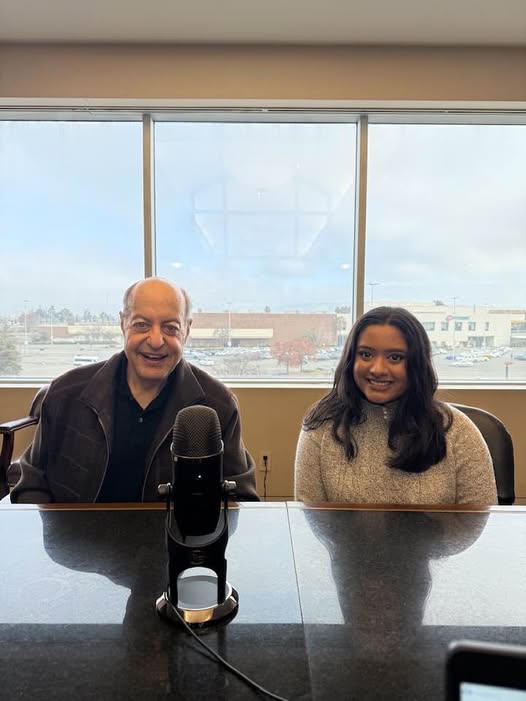
This episode features Fremont Unified School Board Trustee Rinu Nair, a recent Irvington High graduate who won her seat by just 26 votes. Rinu discusses her journey from student wellness advocate to elected official, the mental health crisis facing students post-COVID, school funding challenges, and why empathy is the biggest issue facing society today.
Produced by Jonathan Man
Transcript
Fremont is part of Silicon Valley, the second largest city in Alameda county and the fourth largest in the Bay Area, covering 92 square miles with more than 230,000 residents. Fremont Focus now hosted by lifelong Fremont resident and former city council member David Bonacoursi, will delve behind the headlines to showcase our civic, artistic, educational, nonprofit, faith based and business community leaders in Fremont and the surrounding cities of Newark and Union City to explore matters of local interest.
Today, I'd like to welcome Fremont Unified School Board trustee Rinu Nair. Good morning, Rinu.
Good morning, David.
How are you doing?
Good.
And you are, as I understand it, the Area 4 trustee for Fremont Unified. What does it mean to be an Area 4 trustee for Fremont Unified School Board?
Yeah, for sure. So this is essentially our attendance areas. It actually changes every year for what areas I represent when it comes to. To campaign wise, I have to campaign in Irvington and Kennedy. Those are the areas I represent.
Good. And you were a relatively recent graduate of Irvington High.
Yes.
And you know the lead-in of course is that you are not too many years out of. You can count it months, the time you've been since you graduated from high school. Correct?
Yeah.
And running it. So what prompted you to run at at such an early age for school board?
Of course. I'd always been involved with our school district. In the past it been primarily through volunteer roles. So many of my friends I'd noticed they'd struggled in regards to being able to afford certain things. It was very difficult for some of them. So I began my involvement with schools primarily with volunteering. So I used to do backpack drives, food drives and I would give back to our school district do that way. But actually a lot of it happened after Covid. So after Covid, I saw a lot of our students struggling with that transition from online learning to in person. Some of that including my brother, my friends and more. And there was a huge like wellness related crisis on campus. And so I figured I could do more by advocating for ourselves and our students on a district wide level. So I.
Before we get into that, I don't mean to interrupt, but you mentioned to me or in your bio that when you were in high school you were on something called the Wellness Committee.
Yeah.
Right. Do you want to talk about that?
That's exactly what I was going to talk about.
I would segue right into it.
Yep. But yeah, so I ended up applying for and getting into the Wellness Committee at that time. So when we joined the Wellness Committee, despite it being focused on student wellness, a Lot of the discussions were centered around nutrition. Right. And when I was looking on campus and I was seeing the issues, yes, nutrition is obviously something we have to discuss, but there's a huge mental health crisis that was on our campus. And so the first thing that we did, first meeting itself, was we actually worked to introduce mental health into our district guidelines. Later, we also created the Sandy Hook Promise. So for those who don't know, it's the see something, say something program, which allows for anonymous reporting systems on campus, because many of our students were afraid to come out about some of their experiences in school. And that was a way for them to at least have a safe space to advocate for themselves.
Let me break that down, because I understand Sandy Hook was a mass shooting at this. Yes. Is the Sandy Hook Promise broader than simply say something, see something, say something for a mass shooter? Is it broader than that, or is it.
It is used for violent threats, typically. But what we've seen and it is used, it's also been extended to just any kind of instance where students feel harassed or threatened on campus, because there's a plethora of ways that students can feel that.
Okay, and you won by a landslide. Right? Tell us, how many friends and family made the difference for you? What was your margin of victory, and why did. How do you think you won?
I won by 26 votes. And fun fact, a lot of my friends weren't registered to vote. And so after my race, I literally. I told some of them, get registered to vote. So I always tell some of my friends, you could have been the 27th vote if you registered. How many of my friends and family? I only have, like, three family members who live here who could actually vote. So I guess that's what really counted because a lot of my friends didn't vote, but.
And. And your. Your three family members only voted once, right? Not 20 times.
So. Of course, yeah.
That was an amazingly close election in the way that it does. Because Alameda county is so slow in reporting out that you were not leading initially.
Yes, I was behind five people over 100. Yeah. So when the. When the first results came out, I'd pretty much just. I was like, I already accepted defeat, but I was perfectly fine with it because, like, through that entire process, I learned a lot, and it was. I definitely came out of it a different person, you know?
What was your biggest challenge you experienced during your campaign?
During my campaign, I think there's, like, a multitude of factors that go into it. A lot of it came down to my age. So I will say A lot of people, like, despite what I've done, they did not take me seriously solely because of my age. I remember I knocked on someone's door and they told me, voting for you would be no different than voting for an 8 year old. And I was like, okay, oh man, yeah. Cause I mean, but and also just in general, right? Like this was my first time navigating anything like involving politics or anything like in the realm of politics. I had no clue what the process was like, like, like filling up. My mom didn't either. It was, it was very foreign to us. So like filling, filling out the papers. It took us multiple attempts for some of them, like figuring out how to like canvas doors. Like so, because we didn't have that many funds in the beginning, so I had to find out a way to like take the data and like manually put it into maps and things that took me hours and days to like figure out. And so it was just very difficult navigating the system itself when you don't have experience in it. And obviously again, age was a huge barrier, like in the way people perceive me.
Going back to your experience on the mental health committee, you mentioned about physical or violent threats, but Irvington, like Mission San Jose and now American frankly with the Forest park and Ardenwood areas, have a number of students from very highly professional parents that are really pushing their kids to get into four year schools at the top Ivy League schools. Is that something that is part of your wellness committee focus?
That was something that we've, we've always wanted to like, you know, and that's as a board trustee that I've always wanted to address. The problem is it's, it's a, it's a larger cultural issue. Right. And regardless of policy, and I'm going to say speak from personal experience itself while we as a district provide those resources for our students. Like I had parents who didn't peer pressure me. Right. But I had peers who did a lot of that is.
Or you were blessed by parents that did.
Didn't peer. Yeah, they didn't. That's why they were still accepting of my race but, and of me wanting to run. I don't think like the average parent would be willing to let their kid drop out of college to go run for a school board and go to community college. But so in that sense, like when we're trying to find solutions for that, the only way we could think of it was like, okay, maybe we could do like a little like workshop or like a talk. But those aren't like Tangible, like, concrete solutions to addressing that problem. And that's something. If you ever have any suggestions, I'd be open to listening to or anywhere on this podcast.
Sure. I've. You know, I've been. I was on the. I was president of the Fremont education foundation back 25 years ago, and I've. My whole family has been involved in education. My dad was the first vice principal of American High.
Okay.
Know that. So I've lived this district for a few more years than your age just to, you know, we could both do multiples of your age. But one of the things that I thought was really important that two or three generations before you on the board, although they were contemporaries of Larry Sweeney, was this notion of equity. And is that still an abiding principle that you try to make sure that resources are equitably distributed?
No, of course. And actually, it's something that I, as a board member, actively do, too, because we see that amongst our schools, right. Where sometimes, like, not like, some voices are more louder in the room, and you have to make that effort in reaching out to the broader community. And. And so I remember some people from the Kennedy community when I was running, they brought it up like, we want to feel represented, too. In the past, we haven't been. And we see that with, like, the way that previous bond measures were implemented for the Kennedy community, et cetera. And so as a board member, I've made an effort to go to their meetings, to try to reach out to the community, to be there like an active and present and keep their voice in mind before making any decision. And that's something I'll always advocate for because, I mean, I've had friends, once again, like, my entire journey started with some of my friends who needed. Who were those students who didn't have the resources to go to that room, but needed that help. Right. And so that's. That's something that will always be at the forefront of my priority.
What's been your biggest surprise that you did not anticipate once you got on the board, as to the issues that you have to face, if it was a surprise?
I mean, I always knew the budget was a big issue, but the level at which it was was I was never fully aware of. And I think because a lot of the things that we want to do, we're extremely constrained by. In regards to finances. So when I was running, you know, people kept, like, it was around time for you to make budget cuts in millions. And so I. I was aware of what that would look like to Some degree. Right. But to see how structural it is and to see how it's been a constant problem of not just our school district, but of school districts nationally and statewide. It was really eye opening in that sense because I ran thinking I could do more for my community. I've been trying to do more for my community, but the extent to which I can do that is very limited just because we don't have the same number of resources to do so. And I'm now going to shamelessly bring up the fact that we are trying to pursue a parcel tax. We're trying to look into it.
Yes.
Yeah. So for a little bit on that, we're looking into it. But Fremont is funded at 74% of the state average for a unified district. And beyond that, we basically, for more into that, for how school districts are funded is you can either be a basic aid district or an LCFF district, local control funding formula. So basic eight districts. These are districts that are super wealthy. They're so wealthy, they don't rely on state funding. They can fund themselves. Their taxes are super high. Now, school districts that are funded by the local control funding formula, I can go into more detail, but to summarize it, basically, if there's like a significant population of students that are unduplicated, which.
Is like high need students, significant number of students that are what?
Unduplicated. So that's like income, foster youth, unhoused English language learners, we get more money from them. The weird thing about Fremont is we're in this middle ground where we're technically, you know, we, we're taxed high but not high enough. And we have a high needs population. 38% of our students are unduplicated. But we, we don't get enough from the state funding because we don't have enough unduplicated students. It has to be like above 55% or something to get additional funding. So we're in this middle ground where we have high needs but we don't have enough funds. And it's really, it's like. So when I came out to the board, I realized how much of a balancing act it is because when we're taking away from like we're trying to figure it out, we have to figure out and we're looking at the level of need. There's never enough. And you need to figure out where do we allocate each funds respectively. And it was, it was, it was really disappointing in the sense that there's so much that you want to do, but you just can't you have your hands tied? But at the same time it is a rewarding job when you see, like when you interact with students and such. But yeah, that was something I didn't understand how far it went.
In that regards, have you been, have you seen any impacts on loss of federal funding since January of this year?
Technically, has it affected our budget yet? No, but when it does happen it will if the Department of Education is dismantled. If Trump keeps going on with the way he's going, it's going to affect predominantly our special ed funding. We're not even funded fully for special ed funding federally, so it's going to affect us a lot in that regards. We're going to take away more. So basically more on school budgets we have something called unrestricted and restricted funds. So restricted funds, basically when you spend, it's basically when you, you're required to spend money on specific things. So the government says like you have to spend this much on special ed. So we might have to take more money from our unrestricted funds which we could spend on anything. Right. Like students, like they're programmed, etc to fund special ed. If we get those like that, those cuts to the, from the federal government. We're also seeing that our adult school receives some money from the federal government, so that might, they may be impacted for that too.
And by that too, there's a program called McKinney Vento which provides some needs for unhoused students and, and it has a broader definition of who's considered unhoused and includes under house children. But yeah, that's a challenge in the environment. They need the assistance. Is that McKinney Vento funding at risk right now or have you heard anything to.
Based on my discussions with our staff, I haven't heard anything of that being impacted yet. But we will see. I can't update you on that to be sure. Yeah, yeah. And I will say we have around 267 students who are in that program right now, so they will be impacted.
On a happier note, one of the duties of a school board trustee is to go to graduation soon.
Yes.
So you went shockingly as the Area 4 Irvington Board trustee or representing Irvington to last year's graduation for Irvington with all your classmates.
Yes.
That's great. I ran into your principal this morning at Hops and Beans, Stan Hicks. And I shared with him that I was going to be talking to you this morning. And you say that he was encouraging you to hand out the diplomas, said, no, no, no, that's not my job. I'll be here to support. Right. But how was that for you?
Well, that was great.
Was.
It was a very full circle moment.
Sure.
It was very exciting. I enjoyed it thoroughly. It was actually also on my birthday, so.
Oh, good.
Yeah. I got the best of both worlds on my birthday.
But do you have to stop the graduation ceremony? So you're happy you didn't do that? It's my birthday today, Doug.
But it was really great, like, being able to talk, you know, talk to a lot of my students. To see my friends, like, standing up there and, like, taking my diploma, they're like, there's no words to describe that feeling. I don't know how to describe. I couldn't do words. I really, really. That's a memory I'll never forget.
Oh, that was an exciting day for me.
It was an exciting day for me. And I also got to do Robertson as well.
You got to do Robertson? Yeah. Yeah. Okay, great. And maybe you've touched upon this, but I think it's a good question. Again, on your wellness committee focus, before joining the board, can you share a personal story about a student mental health issue that motivated you to push for integrating mental health into district guidelines?
Yeah, so I see that a lot with a lot of my friends on campus. In fact, like, one of my closest friends, like, when she was 15, which is around the same year that I ended up joining the wellness committee. Trigger warning, but, like, for mental health. But she attempted suicide. She was a 5150. And she. Thankfully, she's. She's alive. But I remember, like, she was gone for a few days, like, three days, three or four days. And I remember, like, she was always online, so I didn't know where she was. And she told me, like, I was in the hospital and I. And. And she was struggling because, I mean, there was no one, like, she didn't have any friends before COVID and, like, being thrust into, like, an environment, like, where you're, like, online and then, like, in person. It was really difficult for her, like, when we were also, like, having friends, like, being social, like, social interaction, etc. And then there's a plethora of other circumstances that led to that as well. But to see that directly and to see that that was an issue directly, to see that one, even if one of our students felt that that was something that. And that was something they had to go through, like, that was. That's clearly a problem if even one student does that. So clearly there's. There's. There's an issue on our campus that we need to address. And so that's why I push for that along with other members of the committee, because. And those were predominantly students who love that push because they've seen it. And I can tell you one thing, which is that, you know, we see. We see the survey results. Like, as a school board member, I see that pretty often. And you'll see, like, oh, you know, like our students do. They, like, they don't report high as. Or as high as it really is on campus, you know, because, like, we will see our survey data and then I see what I see on campus, and I can tell you that it's a lot more. More. It's a lot more of an issue than we like, than we think it is. And I know that we give Fremont the title of the happiest city, but I can say that amongst our young people, mental health is a issue that we have to work towards solving.
And there's peer to peer counseling efforts there too. Talk about how that works for people that understand that.
So. Well, in Irvington, I don't know if it differs for each side, but in Irvington, as student, this is actually led by my history teacher. She's also the one who pushed me to run. So she's also. I'm sorry, she's also the one who helped me, like, who was like, guiding influence when I ran.
Okay.
But she, she. She was like a huge proponent, like peer counseling. And so we used to have peer counselors in the. The wellness center, which is basically for those who don't know what the wellness center is. It's this, like, room or space where students can go to for like, 15, 20 minutes, like, in between classes if they feel, like, stressed out. They need, like, a place to step away. They. It's like a resource for them. And so these peer counselors are a way for students because sometimes it's intimidating. Talk to an adult or an authority figure or an actual counselor for students to interact with someone that's just like them and to be open about their concerns. And some of my friends were peer counselors. I actually was never a peer counselor, but my daughter was a peer counselor. Okay, but. And I do recall, like, them mentioning that they had students who would come to them. And beyond, just like peer counseling, there's a lot of events that they did, like, as a group, like, just for the broader school community, like, cheer people up. They do, like, things like they would give out flowers during finals and did little things like that. So it was a great way to, like, you know, have another Resource for our students and yeah, no more accessible.
What do you think is the biggest issue in public education right now?
Okay. There are plenty.
Of.
I mean, I'd say collectively, if you're seeing something that pretty much like virtually the majority of districts are suffering from, it would be funding. Right. Because there's once again, there's a plethora of students who have needs, who fall and who slip between the cracks solely because our districts do not have the resources to go the extra mile for them. And Fremont is an example of that. And we're seeing this virtually where like every school district, we're seeing declining enrollment. So for more on school, how schools are funded. We're funded based on enrollment, the number of students that go to school. Right. And there. And there's a plethora of other factors that go into that. But when we're having declining enrollment and increasing costs, our budgets are going down and the costs are going up and there's. And the number of students who have needs are going up also at the same time.
Right. Well, you've just touched upon a larger issue that's near and dear to my heart. The reason that there's declining in enroll enrollment is that parents that brought their children in are aging in place and the children aged out and they're not selling their houses, they're not having enough housing opportunities for younger families to move. Been to Fremont.
I support, I support housing, by the way, like building more housing.
So good. Yeah. I mean it's, it's vital for a community to be able to grow. And right now we're getting older and older because people can't afford to move in. I, you know, the question wasn't asked of me, but I going to answer this question and try to impress this upon you. I think the biggest issue in public education is defend the right to.
I was going to say this.
Okay. Because we're. It's under attack. And again, my father, as I mentioned, was the first vice principal at American High. And I've had a lifelong family affiliation of people in the public education arena. And he was a. Before that he was a civics teacher in Mission San Jose High School and before that at Washington High. So he attached three of the five high schools. But we don't even have a strong civics grounding for our students. Talk about the importance of public education and if you have any ideas on how we can revitalize the understanding of students as to how our system of.
Government works or should work, I'll be entirely frank. I've been Trying to do that on my campus in Dean's as a community college student, it's been difficult from what we're seeing in regards to how our schools are fostering that amongst our students. You know, we have AP Gov, we have government classes, civics classes the students can take, but the application of that. And we also do voter registration drives as well. I remember my senior year, I actually was absent that day, but I was sick. But I remember like, our. They made an. Our school's been an active effort to. With the League of Women Voters to like, get every senior register to vote. So we have like a. There's a general foundation there. Right. But having this push for our students to get actively involved, I find it a little difficult. I don't know where to move forward as a district in regards to that. But what I will say is that after my election, like, after I got elected, most students, I can tell you can't name any of their school board members, but some of them knew who I was. Right. And like, especially in Irvington, and even though they didn't know how to access me or like, reach out to me, I would, like, have, like. We would receive like, physical letters from some of them. Like, some of them would reach out to their principal to tell them to reach out to me. Students are now a little bit more aware when they have that representation. So I think the first push is to some degree having representation. And also I've been trying to make it so that we make resources more accessible for our students. I think if we teach our students how to advocate for themselves early on, then naturally they'll be more involved with defending their rights and defending public education and democracy and so on. And so what that accessibility looks like would be ways to anonymously report their issues. I've pushed and I think surfboard is also working with me on this is like basically creating physical boxes or.
And slow down because I know. I know what surfboard is and I know that Jonathan does. What is surfboard?
Surfboard is our student representatives. So they're like basically our student representatives from each school and they. They. They form an independent group of their own. And one of them is also a student board member on the board. Board itself. And they basically advocate for students. They. Some of the changes that have been brought in our district, they actually come from Surfboard. So they. They're really, really.
What. What for. For somebody in my generation, before the Internet, we had no way of knowing who was admission. I went to Washington.
Yeah.
You know, other than sometimes you'd have Dating. That went from cross campus dating, but that was kind of random. But the surf allows people on the Internet through email communication to really connect with each other. So I see much more interaction between high schools because of that than I ever did when I was in high school.
Oh, yes.
So that's, I mean, you take it for granted because you grew up in a Gen X environment, but that isn't a powerful tool that you shouldn't underestimate. We keep our podcast down to about 25 minutes. I could go on for another hour, hour and a half with you. So I'm going to have one more question to you, but is there something that you wanted to touch upon that you haven't had a chance to, to, to talk about?
Talk about? Well, no, I guess like on the issue of like what are the biggest threats of public education? Biggest issues, I just wanted to add, like we are do. We are seeing actively across the country, groups of people actively try to suppress and you know, marginalize some of our students voices.
Right.
We are seeing attacks on like how curriculum is taught. And some of those attacks have gotten really close to Fremont. And so I'd recommend all of you to do research on who your school board members are who are running your races and to vote accordingly because the last thing we need to see that's to our democracy.
That's it. That's very, very good advice. And my last question to you, and it's open ended, is what is the biggest issue you see in our society today as both a young person and as an elected? And I think I fail to mention that you're the. Are you the youngest elected?
No. Okay, I'm the second.
Oh, you've gotten older.
Yes.
Stephanie. A little bit younger than you.
Yeah. No, yeah. But the biggest issue, okay, I would say would actually be empathy. And I think that lack of empathy.
Empathy, yeah.
The lack of empathy that we see as a society is the foundation for a lot of problems. Right. Why are people disengaged from politics? Why are people disengaged from the problems that we see in our world today? Because they fail to empathize with other people and their perspectives and they fail to see the importance of why it is important to get involved. Right. And that lack of empathy extends to other things. Right. Why are people so hateful? Why is it so divisive? Like they can't see what another person's perspective is? And I think that is what we're seeing today. And I think if more people thought empathetically, if we approach our issues more empathetically. If we, if we were able to see another person's like, standpoint for truly what it is, more people would take action and they would be defending our democracy from what we're seeing today. And I think that is the biggest issue that we're seeing today is a lack of empathy. Like we see too many people saying, it's not my problem, it's not going to affect me. And then when it does, they realize.
I want to thank you Rinu Nair for a wonderfully engaging and fast paced podcast today. Looking forward to sharing this with our residents throughout Fremont to get to know you better.
Of course.
Thank you so much.
But thank you for inviting me, David.